Source context: BullSpot report from 2026-05-05T07:44:18.567Z (Fresh report: generated this cycle).
My worst trading month came after I saw a textbook "morning star reversal" on a Solana chart in 2021. Three candles, perfect formation, textbook everything. I sized up. The trade worked initially—then collapsed for reasons the pattern had never promised to explain. The lesson wasn't that the pattern failed. It was that I'd traded a sentence without reading the paragraph.
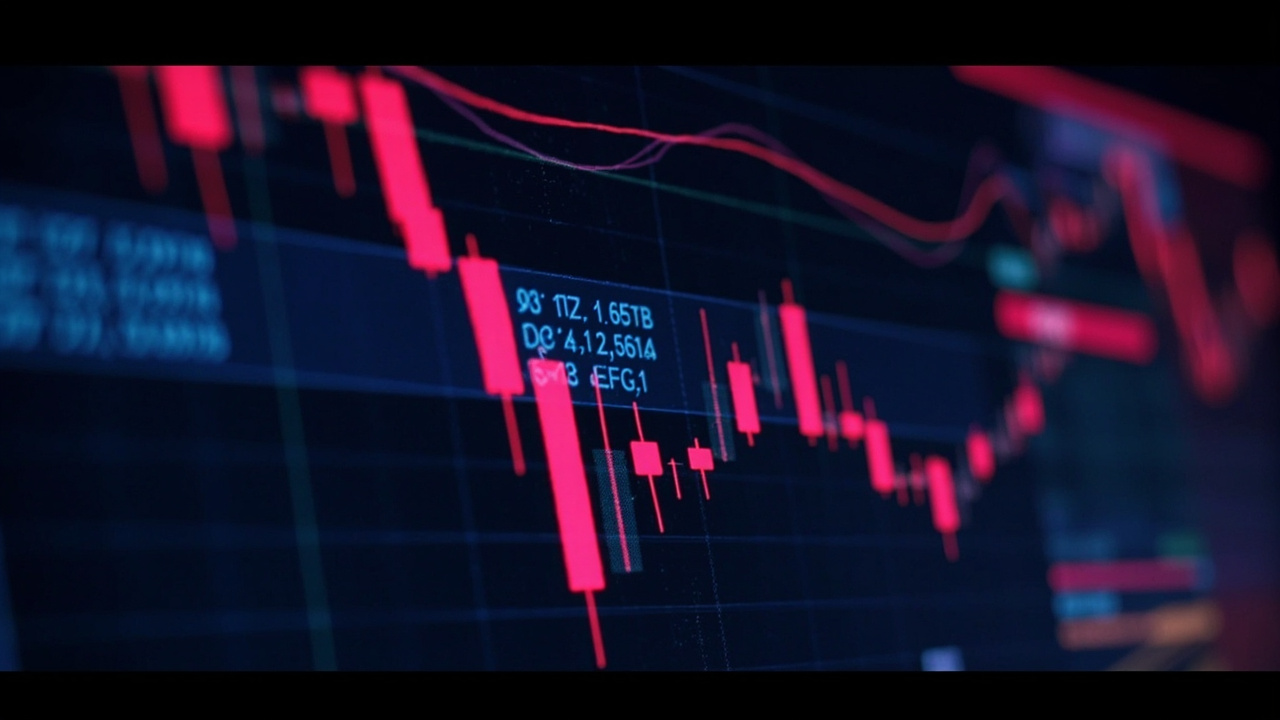
Candlestick patterns are grammar, not prophecy. They're the chart's syntax—showing you who had control, where conviction appeared, and whether the move had company. Most traders learn the vocabulary and skip the grammar. That's where money gets lost.
The Four Questions Every Candle Answers
Every candle on your screen is answering four questions before it closes: Who started with control? Who pushed harder? Where did the fight settle? And did anyone important show up?
Open, high, low, close. That's the whole story in four numbers.
The open tells you who set the tone. The high shows where the bulls pushed and failed. The low shows where the bears dug in. The close—whoever walks away with the close has psychological ownership of that time period. In crypto, where markets trade 24/7, that close matters more than in equities. There's no after-hours buffer. The settlement is the settlement.
A candle's body—the space between open and close—shows you the core contest. A long body means conviction. A short body means hesitation. Wicks—the thin lines extending to high and low—show where price traveled before finding resistance to its move.
Here's the part most people miss: wicks tell you where liquidity sat. That shooting star wick poking above resistance? That's where stop orders clustered. Whoever engineered that candle probably knew it.
The relationship between body and wicks tells you the whole story. A candle with a tiny body and long lower wick reads completely differently than one with the same body sitting at the top of its range. Context is everything.
The Three Patterns That Actually Mean Something
Most pattern guides list fifteen or twenty formations. You need three, and you need them understood deeply.
The Hammer and Its Shadow
A hammer forms after a decline: a small body at the top of the range with a long lower wick—ideally twice the body length. The psychology is straightforward: bears pushed price lower, but buyers stepped in aggressively and rejected that low. The wick is the proof. Someone defended that level.
The inverted version—the hanging man—looks identical but forms after rallies. Same candle, different context, opposite meaning. This is why memorizing shapes without understanding location destroys traders.
Engulfing Patterns
An engulfing pattern requires two candles. The first candle closes near its low; the second candle opens lower (for bullish engulfing) or higher (for bearish) and then fully consumes the first candle's body. "Fully" is the operative word—a partial overlap isn't an engulfing pattern. It's a pattern that wants to be an engulfing pattern but got shy.
The power here is in the reversal of momentum. The second candle shows a group of traders so convinced of their direction that they not only reversed the previous move—they absorbed everyone who was on the other side and pushed through. That absorption shows up in volume.
The Morning/Evening Star
Three candles, more complex, more reliable. The structure: a long bearish candle establishing direction, a small-bodied candle showing hesitation (the "star"), then a bullish candle that closes above the midpoint of the first candle's body.
The morning star works because the middle candle marks indecision. Buyers and sellers are balanced. Then a third candle comes in with conviction—the "star" has become a fulcrum. This pattern requires three candles of proper proportion. Compressed candlesticks can make a morning star look like noise. Zoom out if you're not sure.
Indecision Patterns: What "I Don't Know" Looks Like
A doji—where open and close are the same or nearly so—means the bulls and bears fought to a literal draw. The wicks show they both pushed hard. Nobody won.
Here's where most people go wrong: a doji in isolation means nothing. It's a question mark. Dojis at support after volume accumulation are interesting. Dojis in the middle of a range during low-volume hours on a Sunday are just noise.
Spinning tops—small bodies with long wicks on both sides—signal the same thing: buyers and sellers both pushed, neither committed. Without context, they're pause buttons, not signals.
The tradable insight from indecision patterns comes from what happens next. The market is telling you it's uncertain. That uncertainty is information. A doji at a key level followed by a break below the wick low is a tradeable setup. The doji was the announcement of indecision; the breakdown was the resolution.
Volume: The Pattern's Audience
This is where the grammar breaks down for most traders. A bullish engulfing pattern without volume is a rumor. With volume confirming, it's a signal.
Volume tells you whether the pattern had an audience. A hammer that forms on volume four times lower than the previous ten candles' average? The buyers stepped in, sure—but nobody important was watching. A hammer on volume three times the average, breaking above a previous resistance, at a key support level? That's a sentence worth reading.
The mechanics: pattern forms, price moves in the direction suggested, volume confirms the move has participants. The third piece is where most traders get lazy. They see the pattern, they see the move, they assume the volume followed. It didn't. They skip the confirmation step and then wonder why the trade "failed" when actually they skipped a step.
Specific rule for crypto: volume on exchanges with wash trading gets inflated. Use multiple sources and compare relative volume changes rather than absolute numbers. If volume spiked across several major exchanges simultaneously, that's signal. If only one exchange shows volume, that's likely manipulation.
Support and Resistance: The Pattern's Stage
A morning star reversal at a major support level is a different trade than a morning star reversal in the middle of a range. The stage matters.
Support and resistance aren't mystical lines—they're zones where institutions accumulated, where stop orders cluster, where previous price rejection points created memory. When a candlestick pattern forms at one of these zones, the pattern has context. When it forms mid-range, you're trading a pattern without a stage.
Bitcoin's recent break above the $80,468 level illustrates this. That level wasn't arbitrary—it was a technical inflection point with historical significance. A bullish candle formation there means something different than a bullish candle formation at $80,800, which sits near a liquidity zone but without the same historical weight. Traders who understood the significance of that level could read the candles differently than those who saw it as just another price point.
When you combine patterns with levels, you get setups with edges. A shooting star wick poking above resistance with a doji confirmation at the exact level where previous rallies failed? That's a pattern with context. That's a sentence you can trade.
When Patterns Lie: The Reliability Problem
Candlestick patterns in textbooks have stated reliability rates—70% this, 80% that. Those numbers come from controlled backtests on clean data. Real crypto markets are messier.
Patterns form less perfectly. Volume data is noisy. Markets gap. Support and resistance zones are ranges, not lines, so patterns form "at" levels without being precisely "on" them.
The honest answer: candlestick patterns are confirmation tools, not prediction engines. They tell you what happened with some clarity. They tell you what happens next with much less certainty. The hammer that forms at support is interesting. Whether it leads to a bounce depends on the broader context—trend structure, volume, macro environment—that no single pattern captures.
Common mistakes:
Trading patterns in isolation. A doji means nothing without the level it formed at. A shooting star means nothing without the trend that preceded it. Context is not optional.
Forcing patterns to fit. If you're squinting to see an engulfing pattern, it's probably not an engulfing pattern. Real patterns look like their descriptions. Fuzzy patterns are fuzzy trades.
Ignoring the timeframes. A pattern on a 5-minute chart has different weight than the same pattern on a daily chart. Institutional traders don't move 5-minute charts. They move daily charts. The higher the timeframe, the more meaningful the pattern.
Stale patterns. A morning star that formed three weeks ago tells you nothing about today. Patterns decay. Current context matters more than textbook perfection.
The Grammar That Actually Works
Here's what reliable candlestick analysis actually looks like in practice.
You identify a level worth watching—support, resistance, a structural inflection point. You wait for price to approach that level. You watch for pattern formation as price reacts to the level. You confirm with volume—not just presence, but relative change. You wait for the follow-through: does price continue in the direction the pattern suggests?
This process takes time. It requires patience. It requires watching levels and waiting, which feels like nothing is happening, which is when most traders go off-script and start trading patterns that aren't there.
The best application for candlestick patterns in crypto trading isn't identifying entries—it's identifying entries that meet your criteria. A pattern that forms at a key level with volume confirmation adds confidence to a trade you're already considering for structural reasons. It's not the decision-maker. It's the confirmation that moves the decision from "considering" to "acting."
What to Do With This
Three concrete applications for your next trading session:
Map your levels first. Before looking for patterns, identify the key support and resistance zones on your target asset. Watch price approach those levels. Patterns that form mid-range are lower conviction—patterns at levels are where the grammar makes sense.
Require volume confirmation. No pattern is actionable without volume. This is non-negotiable if you want reliability above noise. Check relative volume against the prior ten periods. A spike of 2x or more average volume with a pattern at a level is a setup. A pattern without volume is a curiosity.
Read the wicks. Wicks show where liquidity sat. A long upper wick rejection at resistance isn't just a bearish pattern—it's evidence that someone pushed price into a zone full of stop orders and got stopped out. That's a specific story. The candle is telling you what happened. Start listening.
Most traders read candles like fortune cookies. The pattern is there, the prediction is inside, crack it open and you know the future. That's not what they are. They're grammar. The sentence is longer. Patterns are a piece of it.
Learn the grammar. Read the whole paragraph.
---TITLE--- The Candlestick Grammar Nobody Teaches: How to Read What the Chart Is Actually Saying
---EXCERPT--- Most traders learn candlestick patterns like vocabulary lists. They remember the names—hammer, engulfing, doji—but miss the syntax. This is how to read the grammar underneath: why certain candles betray institutional footprints, why most pattern recognition is just noise without volume, and exactly where the setup fails when support and resistance aren't factored in.
---META--- Learn to read candlestick patterns like a trader, not a textbook: volume confirmation, support/resistance context, and the reliability question answered plainly.
---TAGS--- candlestick patterns, price action, crypto technical analysis, trading signals, volume confirmation, support resistance, crypto trading strategy